
Personal Training Business FAQ
Answers to the questions people ask before opening a studio, and before joining.
Start here

Certification teaches the coaching. A personal training business still needs lead flow, consultations, pricing, follow-up and retention systems. That is the business side most certifications never cover, and it is why capable trainers stay quiet for months while less skilled ones fill their diaries.
The fix is not more marketing. It is a repeatable sequence for getting inquiries, converting them and keeping people long enough to be worth having.
Primarily for people opening a personal training studio: professionals with capital comparing a franchise against going independent, and trainers ready to move from renting space to owning a location.
Also for studio owners already trading who want the business to run on systems rather than on the owner, and for online or hybrid coaches building an in-person side.
Employee and independent trainers are welcome, and the library tier exists for them.
See Results and Experience for what has been built and where.
No. The systems cover opening a studio as well as running one. If you have not opened yet, the material covers the numbers, the model, the site and lease, the offer and the systems, in the order they need to happen. If you are already trading, it covers making the business work without you on the floor.
The one thing it is not built for is staying a renter indefinitely. Ownership is the destination, and everything here is pointed at it.
Playbooks and access
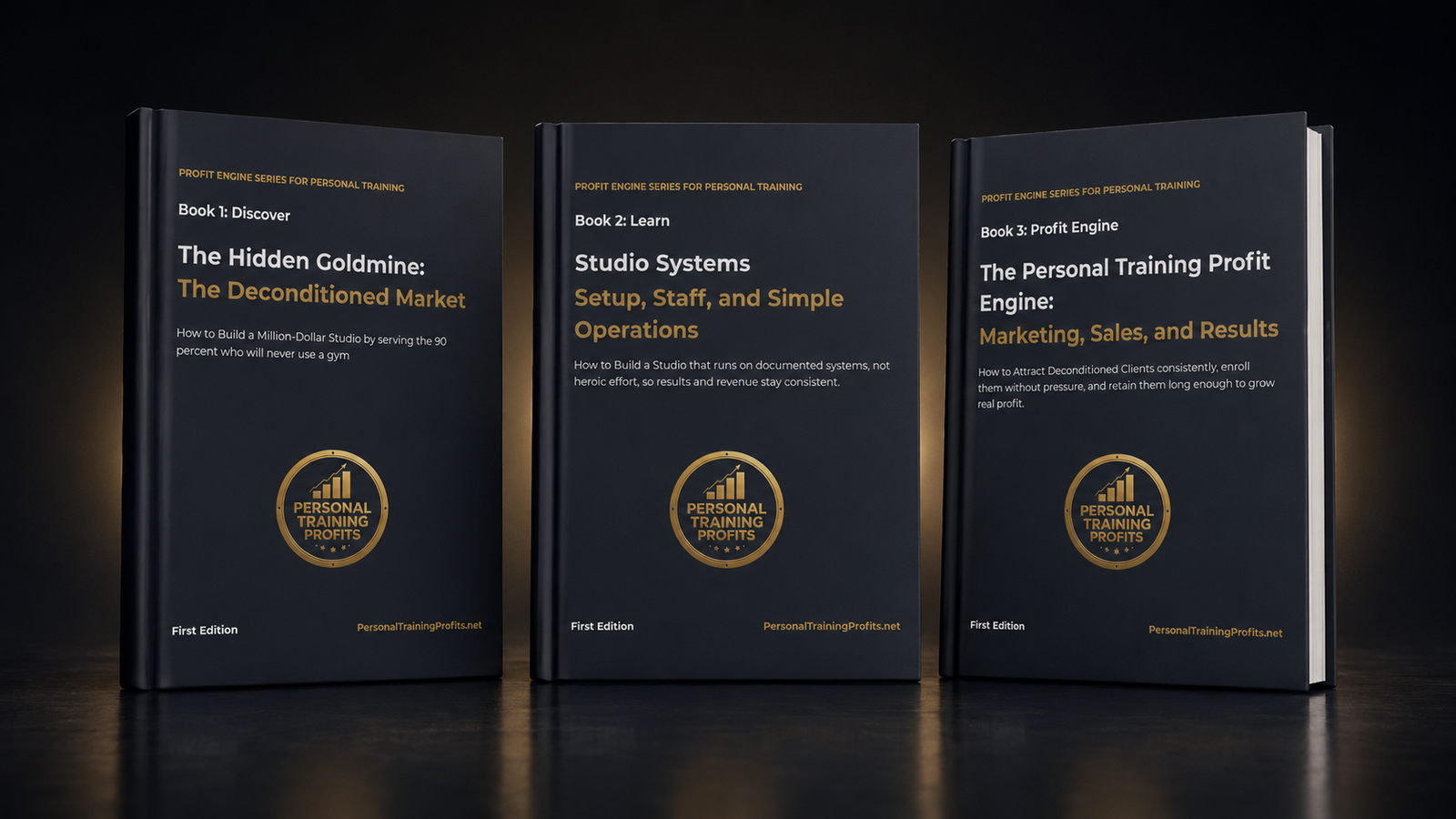
Three volumes, 727 pages in total. The first covers market and positioning. The second covers studio systems and operations. The third covers marketing, sales and results.
They are written as working documents rather than as reading. Scripts you use in a consultation, checklists for a lease walkthrough, calculators you run with your own rent and your local session rate.
Playbook 1 if you have not opened yet. Market, positioning and offer come before a lease, and getting this wrong is the most expensive error available.
Playbook 2 if you are open and the problem is delivery. Studio systems, staffing and the operating rhythm that keeps quality consistent when you are not on the floor.
Playbook 3 if you are open and the problem is the diary. Marketing, consultations, conversion and retention.
Most people opening a studio work through them in order. Most people already trading start with the one that matches the problem they have this month.
Systems, growth, and expectations

No. If you are training clients in a gym, in homes or online, the lead flow, consultation, pricing and retention systems work as they are, and most people see the difference in their numbers before they see the inside of a lease.
What a studio changes is what you own at the end. Renting space means someone else sets the rent, the hours and the rules, and can end the arrangement. That is the argument for ownership, not the requirement for starting.
No. The lead sources that work for a local studio are the ones you control: local visibility, referrals, partnerships and following up properly with people who already enquired. Most studios have more revenue sitting in the second and fourth than they will ever get from a new campaign.
Ads work once the consultation converts and clients stay. Before that, paid traffic just makes an expensive problem happen faster.
Six numbers, weekly. Enquiries received, consultations booked, show rate, close rate, retention and average client value.
Six is enough to find the problem. If enquiries are fine and consultations are not, the issue is your booking process. If consultations are fine and close rate is not, the issue is the consultation itself. If everything is fine and revenue is flat, the issue is retention. Most owners track revenue only, which tells them something is wrong without telling them where.
The Studio Feasibility Report – $2,500.
A fixed scope 30 day analysis of your specific market and site: market and site assessment, model selection and equipment specification, a pro forma built on your numbers, a franchise versus independent comparison for your market, and your first six week action plan.
It sells analysis, not a promised outcome. Sometimes the answer is that the numbers do not work in your market, and that is worth knowing before a lease is signed rather than after.
Credited in full against a Studio OS Launch if you proceed within 90 days.sessment