How to Open a Personal Training Studio Without Buying a Franchise
Everything on this page is free. The costs, the revenue model, the sequence, and the mistakes that make it expensive. No email required, nothing held back for a download.
That is deliberate. The information has never been the hard part. Doing it in a specific city, with a specific lease, on a specific budget, without making the two or three errors that cost people their savings, is the hard part. This page is the first half. Help with the second half is at the bottom, and you do not need it to use any of this.
The short version: a small personal training studio can open for a fraction of what a franchise costs, and a full owner-operator week can produce around $100,000 a year before tax. Both of those numbers are set out in full below.
Where These Numbers Come From
This is not a model assembled from other people’s blog posts.
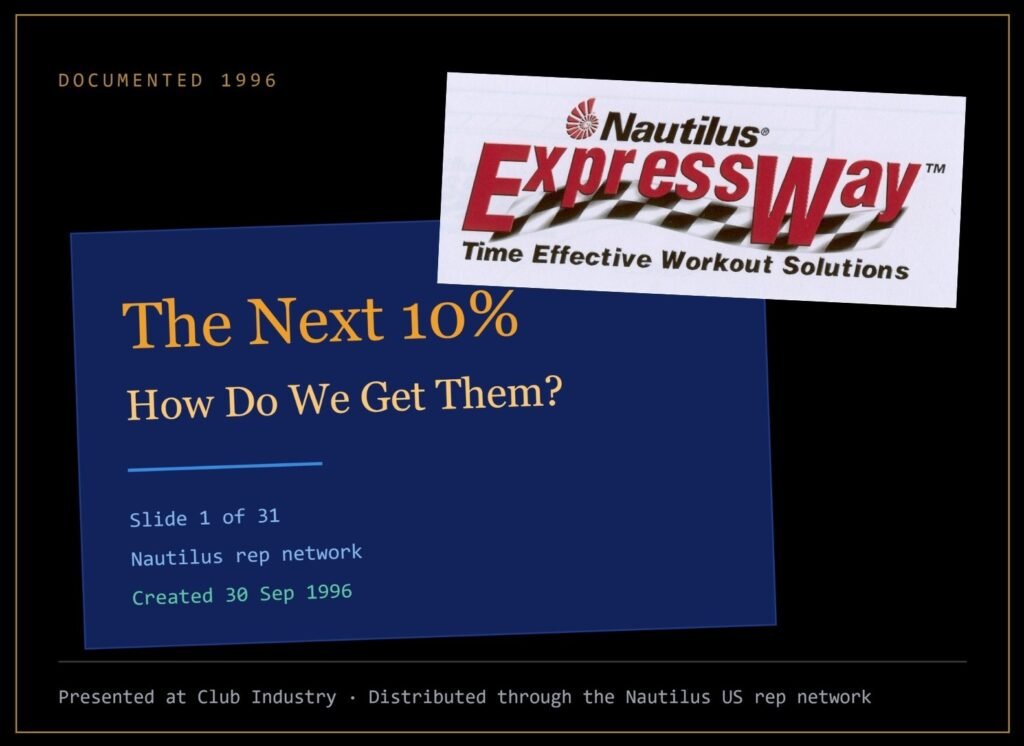
In 1996 this model was presented to Nautilus at Club Industry and distributed through their US rep network, before the personal training studio franchise category existed. The argument then was that health clubs served a small fraction of the population and nobody had properly built for the rest. The industry has since built a multi-billion dollar category on part of that argument.
The studios behind the figures on this page:
Renouf Personal Training Centre, Perth, Western Australia. Company formed with David Renouf in 1991, centre opened 1992, through to 1994. Co-founder and part owner. Over $1,000,000 a year, one centre grown to four.
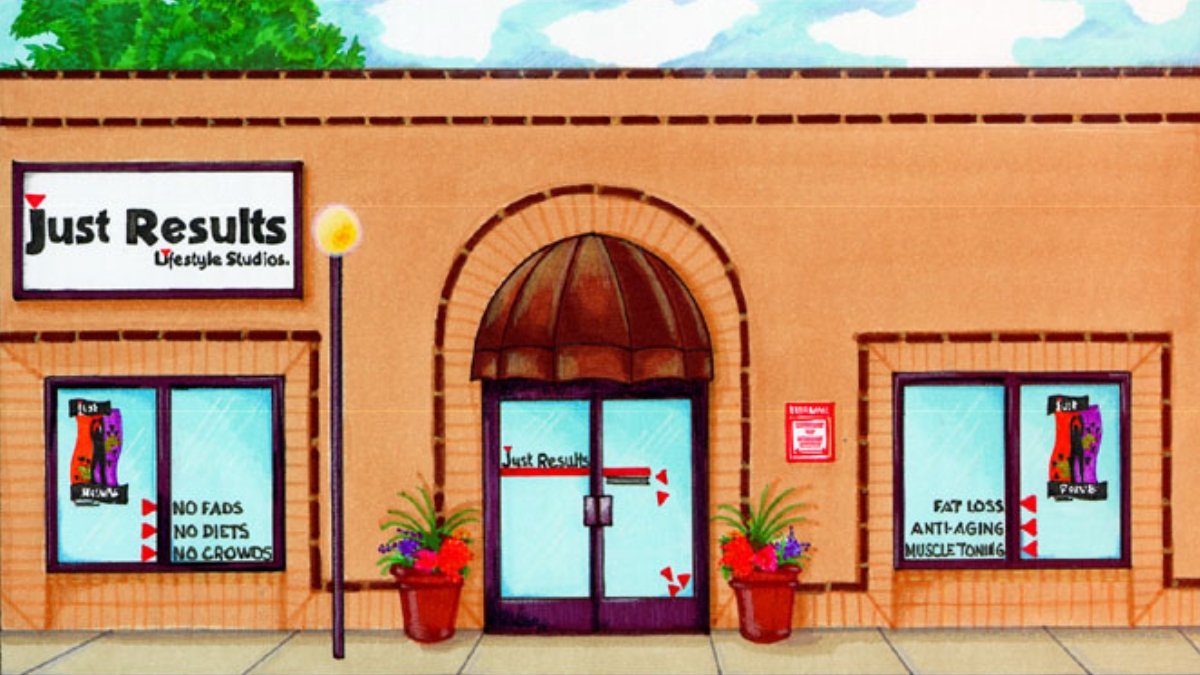
Just Results Lifestyle Studios, Kettering, Ohio. 1997 to 2000. Founder and part owner. Over $500,000 a year from one location, more than 1,500 sessions a month, built to franchise-ready by 2000.
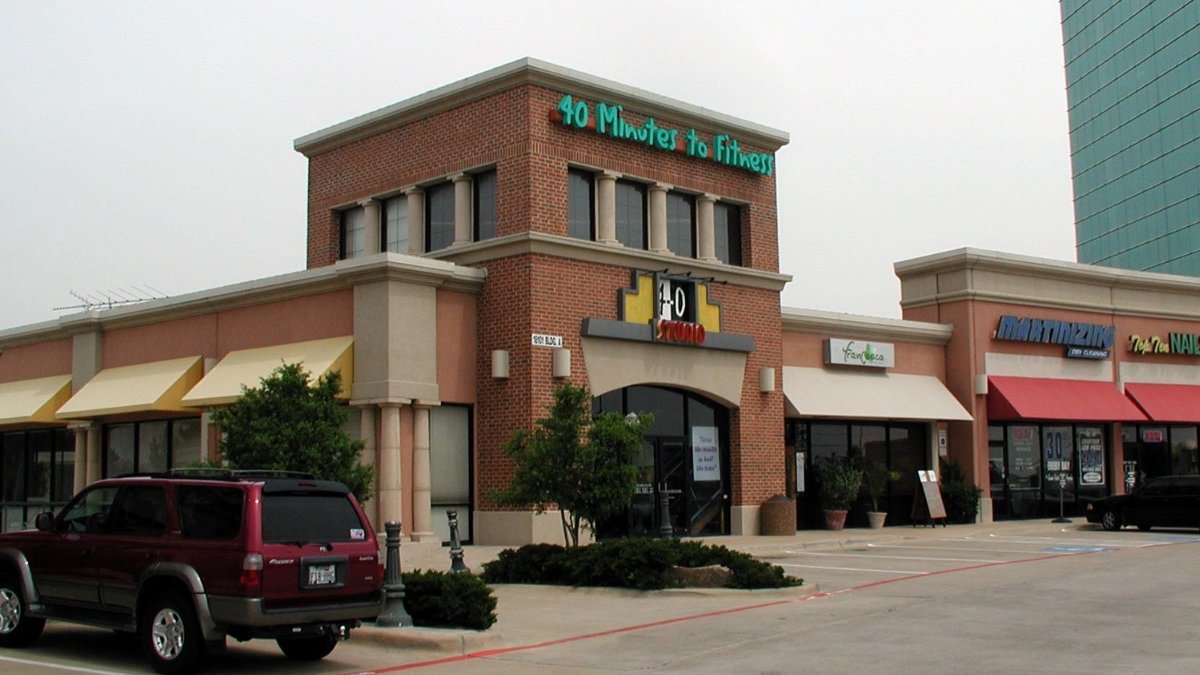
4.0 Studio / Planet U, Dallas, Texas. 2000 to 2003. Engaged as consultant and general manager. Monthly revenue lifted from $40,000 to over $80,000, with 200 active clients.
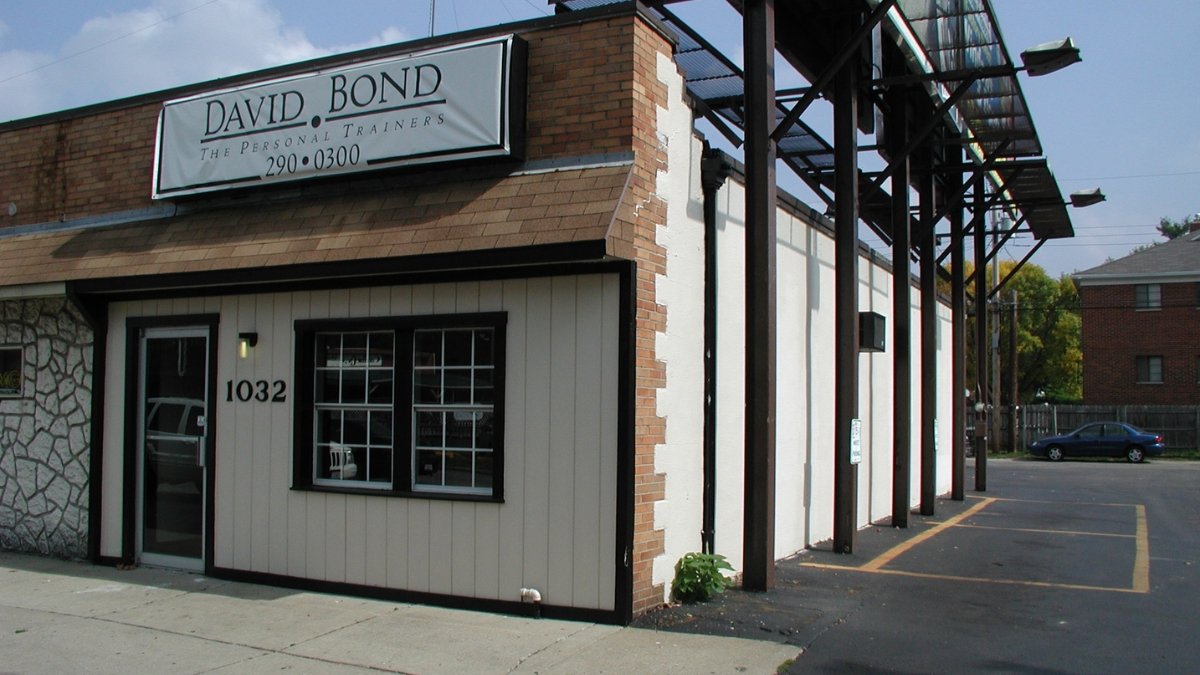
David Bond – The Personal Trainers, Oakwood, Ohio. 2005 to 2015. Engaged as consultant and coach to the owner. An 850 square foot room producing over $100,000 a year in before-tax owner result, sustained for a decade.
That last one matters most on a page like this. It is an 850 square foot studio, run by its owner rather than by the person who designed the system, producing six figures for ten years. It is the closest documented example of what the numbers below describe.
Why a Studio Rather Than Gym Rent
Most trainers start inside somebody else’s building. It is the sensible first move, and it works for a while.
The problem is structural rather than personal. A gym sells access. It wants membership volume, foot traffic and low-cost entry for as many people as possible. A personal training business sells guidance, accountability, appointments, progression and results. Those are two different businesses with two different economics, and running the second one inside the first means somebody else sets the rent, the rules, the opening hours, the pricing context and the client relationship.
You control your sessions. They control almost everything else.
That arrangement can end. Management changes, rent rises, the rules shift, and a business built on it has nowhere to deliver. Renting gym space can help you start. It cannot help you finish.
A studio is not a bigger version of the same thing. It is a different asset. You set the environment, the price, the standard and the client experience, and at the end of it you own something that can be sold. That is the whole argument, and everything below is the arithmetic behind it.
What It Costs to Open
A small owner-operator studio does not need premium retail frontage, a large footprint or a six-figure fit-out. Around 850 to 1,200 square feet works for one or two trainers. What matters is easy access, parking and the right local demographic.
Here is the honest build.
Equipment, $20,000 to $30,000. A full working set for a small supervised studio. Roughly the price of a mid-range car, and the single largest line.
Lease deposit and first month, $2,000 to $3,000. In many US markets a suitable small commercial space runs under $1,000 a month in rent. Rent is not your whole fixed cost, though. Add insurance, software, utilities and any equipment finance and the monthly figure typically runs closer to $2,500, which is what the working capital line below is based on. Availability is good and the exercise is finding the right unit rather than affording one.
Fit-out, $0 to $15,000. The widest spread on the list, because it depends entirely on the unit. Some spaces need flooring, mirrors, paint and lighting. Plenty of units in the current market are usable as they stand. Budget for existing bathroom facilities rather than building wet areas, which is where fit-out costs escalate.
Signage, $100 to $2,000. At this level a professionally made sign fixed to the frontage is sufficient.
Website, booking and payments, $500 to $3,000. Plenty of services do this well at low cost.
Insurance, permits and licensing, $1,000 to $3,000.
Professional fees, $1,500 to $4,000. Entity formation, an attorney to read the lease, and a CPA to set the books up correctly. Skipping these is not a saving, it is a deferred cost with interest.
Pre-opening marketing, $3,000 to $6,000. The goal is opening with appointments already booked. Less if you already have clients who will follow you, which is the single biggest variable in the whole build.
Working capital, $7,500 to $15,000. Three to six months of fixed costs, held aside to carry the studio through the ramp. Six months is the realistic run to a full book. Three is the floor.
This line is separated deliberately. Franchise disclosure documents carry runway as its own item, so any independent total that folds it into marketing is not comparing like with like.
Contingency, 10 percent. Something always costs more than the quote.
The total, two ways
Paid outright: roughly $39,000 to $89,000.
With equipment financed: roughly $19,000 to $60,000. Equipment finance on a package this size runs around $580 to $600 a month, paid out of revenue rather than out of savings. Financing removes the largest line from the upfront cash requirement, but it does not remove the ramp, so the working capital line rises rather than disappears. That is how most small studios actually open.
The comparison worth sitting with is the entry requirement. Published franchise disclosure summaries show minimum liquid capital requirements of roughly $75,000 to $175,000 before a brand will consider an applicant, and that is liquid capital held in reserve, not the cost of opening. An independent studio can open outright for less than most of that range, and financed for less than a quarter of it.
Figures are illustrative US ranges for a studio of roughly 850 to 1,200 square feet. Costs vary by market, unit, and how much of the work you do yourself. The specification moves this number more than the market does. Two of the nine lines above are local, occupancy and fit-out. The other seven are close to the same anywhere. Equipment alone spans $20,000 to $30,000 on this list, so moving from the top of that range to the bottom changes the total by about $11,000 once contingency is applied, without anything about the studio changing, because a leaner set that does the same job for the same client simply costs less. So when you see a figure like this, including this one, the useful question is what specification it assumes.
What It Can Make
Once open, the model is simple enough to check on paper before committing to anything.
18 clients, training three times a week, 30-minute sessions at $50.
That is 54 sessions a week. $11,700 a month. $140,400 a year gross.
After occupancy, equipment financing, insurance, software, card processing, accounting and ongoing marketing, modeled at about $40,000 a year, the example lands at approximately $100,000 a year, before tax, to the owner.
Those 54 sessions are 27 hours of delivery. Add roughly 10 hours of sales and marketing and 6 hours of admin and assessments, and the real week is about 43 hours.
Two things worth saying plainly. That is a full working week, not a passive income, and the hours above are why. And most trainers reading this are earning considerably less for a comparable week, with none of the control and no asset at the end of it.
Where the leverage starts
The model stops being a job when it grows past one schedule.
| Model Size | Clients | Estimated before-tax owner result |
|---|---|---|
| Owner-operator only | 18 | about $100,000 a year |
| Owner plus one part-time trainer | 28 | about $140,000 a year |
| Owner plus two part-time trainers | 38 | |
Assumes $50 per 30-minute session and $20 per session paid to the trainer. Each part-time trainer serves about 10 clients. At $50 a session with $20 to the trainer, $30 stays with the studio, which is $900 a week or $46,800 a year from 30 sessions. Published above as roughly $40,000 to absorb the extra marketing, payroll processing and insurance that come with staff. An 850 square foot studio holds up to three trainers working at the same time, so occupancy and equipment do not increase as the second and third schedules fill.
On session frequency
Three sessions a week is the model. Two produces a materially different business: the same 18 clients generate $7,800 a month instead of $11,700, and the owner-operator income argument disappears.
This is not a pricing trick. Documented operations in Perth, Western Australia and in Ohio both ran three sessions a week as the default with two as a step down, and both held the retention to support it. If your market genuinely will not carry three, the honest answer is that you need more clients, not a different sales script.
Examples are illustrative and are not a guarantee of income. Results depend on market, pricing, costs, execution, staffing, retention and operating discipline.
What a Franchise Costs Instead
There is a real case for buying a franchise, and it deserves stating. You get a tested format, an operations manual, supplier relationships, training and a brand people may already recognize. For a first-time operator with no business background, that can be worth paying for.
Here is what it costs.
Entry fee: roughly $49,500 to $58,000. Paid before the doors open, and the number most prospective owners spend the longest thinking about.
Total initial investment: roughly $260,000 to $880,000 across the personal training franchise category, drawn from published disclosure document summaries for 2023 and 2024.
Royalty, brand fund and required marketing: 7 to 10 percent of gross revenue. Charged on revenue rather than profit, for as long as you own the business. Royalty and brand fund alone, the portion that leaves your business permanently and can never be spent locally, runs 7 to 9 percent.
Published disclosure summaries put average gross revenue per studio across this category anywhere from roughly $275,000 to over $1,000,000, depending on brand and location. Take a studio in the middle at $600,000. At a combined 7 to 10 percent, the system fees run $42,000 to $60,000 a year. Over a ten-year hold, with the entry fee added, that is roughly $470,000 to $658,000 paid to the franchisor. Modeled at the upper end of the published revenue range, it passes $850,000.
That number appears in no brochure. It is not concealed either. It sits in the disclosure documents as a percentage, which is a very different thing from seeing it as a dollar figure with a decade attached.
And at the end of it, the brand is not yours. The agreement usually transfers with the sale, to a buyer the franchisor approves, with the royalty intact.
Figures drawn from published Franchise Disclosure Document summaries. No brand is named. Review the current FDD for any brand you are considering and have a franchise attorney read it before signing.
Three Studio Models
The right build depends on what you want to own at the end, not on how long it takes.
The owner-operator studio. Small footprint, one or two trainers, you deliver most of the sessions. Lowest capital requirement, fastest to open, built around the $100,000 model above. This is where most people should start and where many should stay.
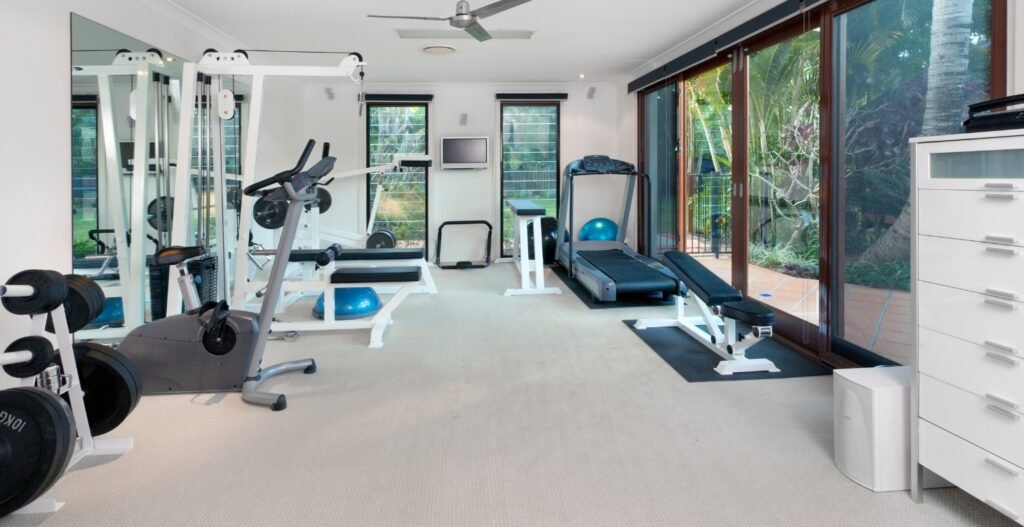
The multi-trainer studio. A larger leased location built for at least two trainers from the outset, with the systems for rent and overhead coverage, hiring, capacity planning and delivery standards. The point is to avoid building a bigger version of a self-employed job.
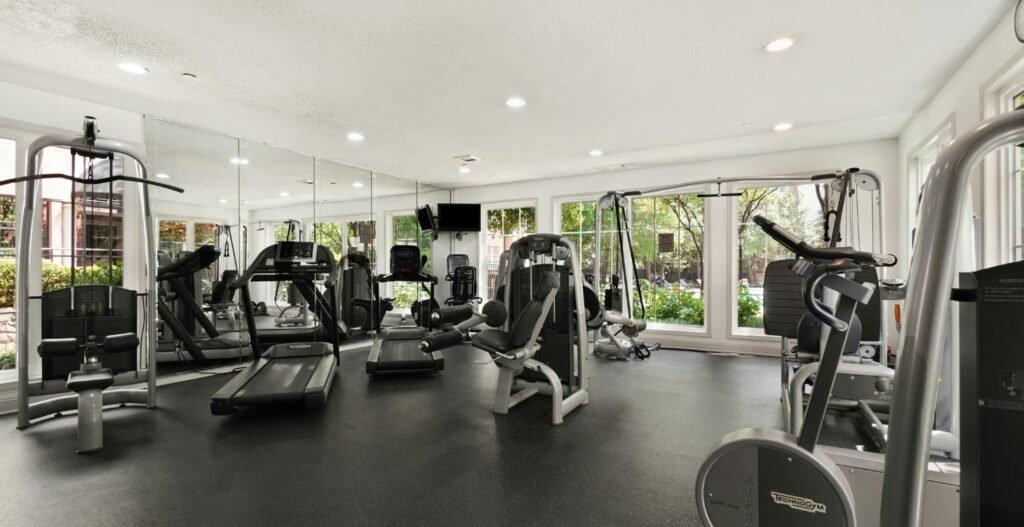
The commercial studio. Multi-staff operation with franchise-level operating systems: unit economics, facility standards, hiring standards, operating cadence, dashboards and replication controls. Built for scale and for repeatable units, without the franchise agreement.
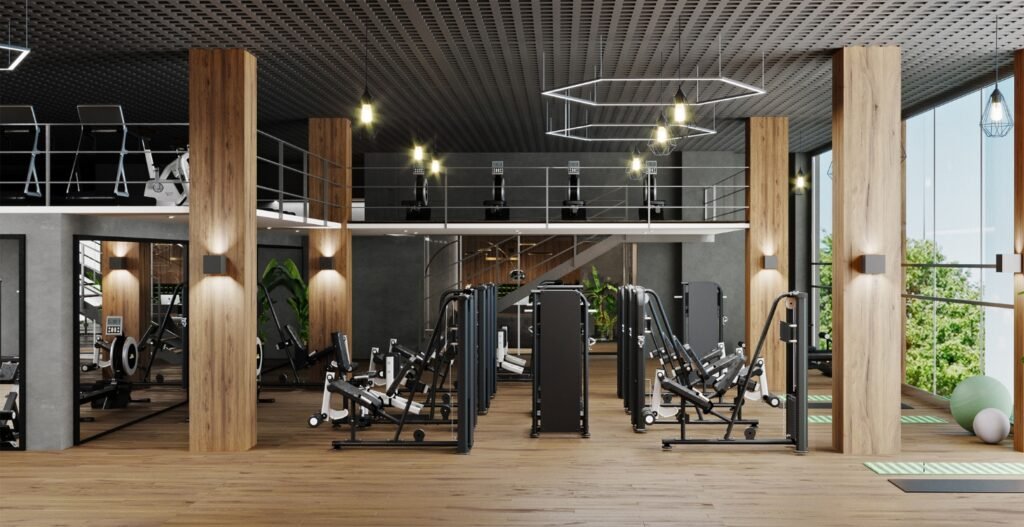
The systems are the same in all three. What differs is the scope of the build.
The Order Things Happen In
Most of the expensive mistakes in this business are sequencing mistakes. Things done in the wrong order, or done before the decision that should have preceded them.
First, the numbers and the market. Local session rate, catchment, competition, and whether the arithmetic works at realistic capacity. This is a location test, not a pricing formula. If the model does not work on paper for your city, no amount of execution fixes it.
Second, the model. Owner-operator, multi-trainer or commercial. This decision sets the space, the capital, the equipment and the staffing plan. Making it after signing a lease is how people end up with the wrong building.
Third, the site and the lease. A five-year commitment on the wrong unit is the most expensive error available in this industry.
Fourth, the offer and the pricing. Before opening, not after. Studios that open and then work out what to charge spend their first year retrofitting.
Fifth, the systems. Consultation process, assessment, six-week onboarding, re-assessment rhythm, retention and reactivation. These are what turn a full appointment book into a business.
Sixth, pre-opening marketing. The goal is opening with appointments booked rather than with a launch party and an empty schedule.
Then open. With the right location and an existing client base, three months from decision to doors open is realistic. Without either, expect longer.
Where People Get This Wrong
Signing the lease first. The unit is exciting and available and someone else is interested. It is also a five-year obligation made before the model was tested.
Building for people who are already fit. Roughly three in four adults do not meet basic activity guidelines, and most of them will not walk into a busy commercial gym. Building another facility aimed at the small minority who already train is competing for the hardest customers in the market.
Over-building the space. Wet areas, premium frontage, a reception larger than the training floor. None of it increases what a client pays per session.
Pricing from what the gym down the road charges. They are selling access. You are selling supervised appointments. Different product, different price.
Hiring too early. A second trainer before the owner’s own schedule is full adds cost without adding capacity that anyone is asking for.
No re-assessment rhythm. Clients who cannot see progress leave, and the studio is back on the lead-generation treadmill it just escaped.
Treating retention as a marketing problem. It is a delivery problem. Supervision, tracking and visible progression are what keep people paying.
If You Want Help Doing It
Everything above is the model. Applying it to your market, your unit and your capital position is the part most people want help with.
The Studio Room, $69 a month. The Profit Engine Series playbook to start, with the remaining two volumes unlocking at 60 and 120 days. 33 video lessons mapped. Numbers calculators and pro forma templates. Franchise cost data. Group question and answer.
The Operators Room, $347 a month. For people already running a studio. All three playbooks, 727 pages covering positioning, studio systems and the profit engine, unlocked immediately. Plus equipment specification and supplier introductions, monthly advertising creative, and monthly operator calls.
Studio OS Launch, $24,000 total. Done with you. Site selection, lease review, equipment specification and sourcing, systems installation, pre-opening marketing and weekly one-to-one coaching for twelve months. Paid as a $6,000 deposit and then $1,500 a month for twelve months. By application.
Most people reading this page should start with the Studio Room. It is the cheapest way to test whether the model works in your market before you commit capital, and the numbers calculators and franchise cost data are the same ones behind everything on this page. If you already run a studio, start at the Operators Room instead. Studio OS Launch is for people who have decided to open and want it built alongside them.
No vendor commissions are taken on any equipment or service. Nothing is paid by any supplier, so the only incentive is getting the best price for the studio. Independence is the product.
Where to Start
Everything on this page is category level. It is not your rent, your local session rate, your catchment or your capital position, and those are what decide whether any of it works.
Every Figure on This Page Came From One of These
Dates, places, roles and results on every one. Three were built and owned. Two were somebody else’s business, which is the harder proof and the more useful one.