
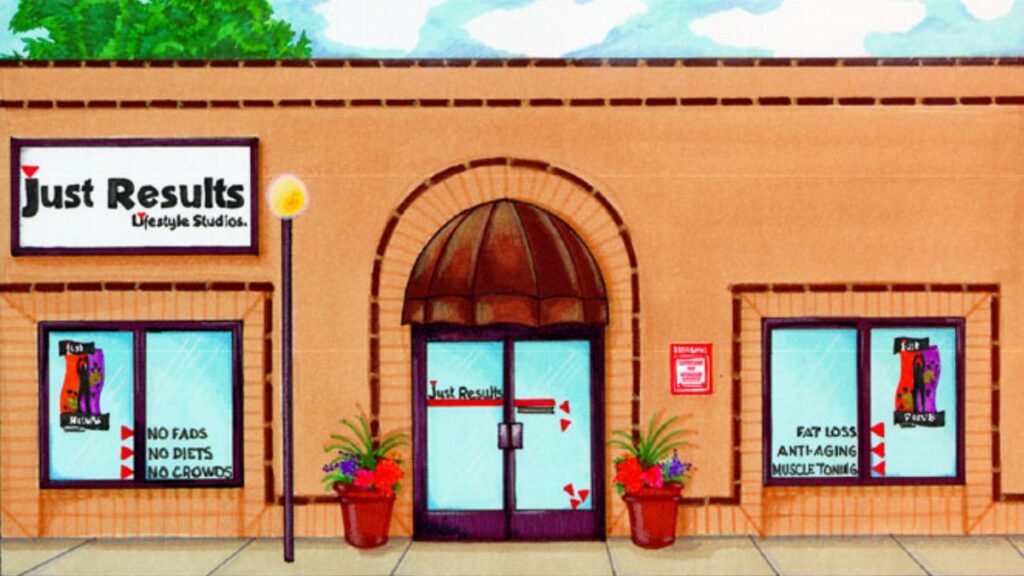
Most personal trainers only see the industry as it exists today. This case study is a different chapter: the point where I had full control to build the studio model the way I believed it should be built, systemized, turnkey, and designed for the deconditioned market from day one.
It is also a credibility story. Many of the “new” ideas that studios and franchise-style models promote today were being built, tested, and refined in the late 1990s, in real operations, with real numbers and real systems.
📌 What you will learn from this case study
- Why the turnkey studio model is not new, and what it looked like in the late 1990s
- How program-based selling, a 6-week start, and strict systems created high conversion and strong retention
- How a second, smaller studio proved a more duplicatable model with faster return
- Why internal training and “franchise-style” standards matter more than trainer ego or random creativity
- What I would keep today, what I would change today, and what today’s trainer should copy
Table of Contents
- Case Study ID
- Background and context
- Starting point
- The problem
- The decision
- The build
- The numbers
- What changed and why
- What I learned
- Then vs now
- Next step
Case Study ID
Case Study Name: Just Results Lifestyle Studios
Time Period: 1997 to 2000
Location: Kettering, Ohio, USA
Business Name: Just Results Lifestyle Studios
Business Model: Franchise-turnkey studio concept aimed at the deconditioned market
My Role: Founder and President
From the beginning, this business was built as a franchise-turnkey concept, not a single studio that was “systemized later.” The first location was a little over 3,000 square feet, and a second location of about 1,500 square feet was later developed to prove a smaller, easier-to-duplicate model. By 2000, the concept had been developed to the point of being franchise-ready for sale.
1️⃣ Background and context
Between the Renouf chapter in Australia and the launch of Just Results in Ohio, I went through a period that shaped this model in a deeper way than most people realize. I took an international opportunity in the Middle East in 1994, working in the United Arab Emirates and doing business across Saudi Arabia, Oman, and the early stages of India. During that period, I was also involved in several large, high-profile commercial installations.
When I came to the United States on vacation, I saw more opportunity here and decided to settle in the U.S. at the beginning of 1995.
What mattered most was what the business kept proving. When I brought the same core program structure into the U.S., I saw that it worked the same as it had in Perth. Six-week programs, guaranteed results, and clear programming were still a winning formula.
I also saw the same conflict repeat itself. A trainer can begin in a commercial gym, a fitness center, or even by training people in their homes. That can be a valid learning phase. But it is not the same as owning a business you control. In my experience, if you are renting space inside a commercial gym, the clock is ticking. If you do well, the rent goes up, the terms change, or the facility tries to copy what you are doing. The gym membership model and the personal training model are simply too different.
In the second half of 1996, I became involved in another studio situation through a partner-based setup. It had promise, but by 1997 the weaknesses showed up. After I sold my ownership and consistent advertising stopped, sales fell, clients left, and the business moved from profit to loss.
I stepped back in and rebuilt it as a fresh business from the remains of the old one, and that became Just Results Lifestyle Studios. This was the first time I could fully control the brand, layout, office systems, staffing systems, positioning, and culture from the start. It was the first time I could combine everything into one turnkey model from day one, and build it to run without depending on me personally doing the training, sales, or assessments.
“The business has to be documented, systemized, and built to run without depending on the founder.”
2️⃣ Starting point
When Just Results began, I was not starting from scratch. I was stepping back into a situation I already knew well. Before Just Results, I had helped start a business in that location with a group of partners. But after I sold my shares and left, the decline began within weeks. Once the systems were changed, sales dropped, clients left, rent and lease payments fell behind, and the operation moved from working to failing in a very short period of time.
That decline created the opening for me to step back in and take over the location, this time with the backing of a single large investor. That funding mattered because it meant the business could be rebuilt properly: remodel, pre-launch, and opening, with the business plan executed as written.
What I wanted to build this time was everything earlier ventures had only partly solved: a fully systemized studio, positioned for the deconditioned market, built as a turnkey franchise-ready model, and designed not to depend on me personally doing the selling or delivery.
“Control changes everything. Once you have control, the systems can actually be installed.”
3️⃣ The problem
At the time, the typical studio model was usually a small owner-operator setup. It often depended on the founder being there, with limited systems and limited ability to duplicate cleanly. That was exactly what I did not want.
With Just Results, the question was not simply how to open a good studio. The question was how to build a studio that could produce consistent results while multiple trainers were working at the same time, under one disciplined system. At peak times, that meant up to 6 trainers working at once, and as many as 12 sessions per hour. That only works when the business is built around consistency.
Everything sat under the Program Director model. The Program Director was responsible for client safety, welfare, and results. Trainers were expected to coach the same way, use the same structure, and speak the same language. Deviation was not treated as creativity, it was treated as a threat to consistency and quality.
Staffing philosophy was also different. I was not looking for “super-trainers.” I was looking for people with strong people skills, energy, coachability, and fit with the system. In many cases they were younger, excited to learn, and saw the role as a career path, trainer → Program Director → potential studio ownership.
Formal certifications were not the main hiring filter for trainers. We built our own internal certification and training system because consistency mattered more than paper credentials alone. Advanced qualifications mattered more at the Program Director level. Qualifications matter, but they are a starting point. Business systems are what determine whether personal training becomes a real career.
4️⃣ The decision
By the time Just Results was born, the “why now” was clear. I had worked across multiple countries, multiple business models, and many different facilities. I had seen what worked, what failed, and what kept repeating. And for the first time, I had full ownership, decision-making control, and the financial backing to implement the model the way I wanted.
Just Results was committed from day one as a franchise-style model, built to be systemized, repeatable, and duplicatable.
The main entry offer was a 6-week program. The most popular format was 12 sessions over 6 weeks, usually 2–3 sessions per week. The trainer-led portion of the session was less than 30 minutes. Clients did a short warm-up before working with the trainer, and after the trainer-led session, the trainer set the client up on progressive cardio, building toward about 30 minutes as they left.
This was still true one-to-one personal training, with occasional dual training (2 people sharing 1 trainer). Everything was sold as a package, not as random sessions, and results were guaranteed.
Marketing used real clients, real testimonials, and real before-and-after results with permission. We eventually had an entire wall of proof stories showing outcomes like strength, weight loss, fat loss, blood pressure improvements, and other measurable changes.
The core market was weight loss, with many clients being middle-aged women. That mattered because the environment was designed to feel welcoming and non-intimidating: layout, music, decor, colors, and the overall feel were intentional.
Because Ohio regulations restricted personal trainers from giving nutrition advice, the model included a licensed dietitian to support lifestyle change and nutrition properly.
As the business evolved, additional programs were added, including an anti-aging program for seniors and a golf conditioning program, but the core remained weight loss and the broader deconditioned market. Focus mattered. You cannot be all things to everybody.
5️⃣ The build
The build-out of Just Results was about more than equipment and layout. It was about assembling a system that could create predictable lead flow, predictable delivery, and predictable client outcomes.
Lead flow
At launch, television commercials were the primary driver and helped establish the first core client base. After launch, lead flow was supported through weekly neighborhood newspaper ads, referral programs, word of mouth, trainer business cards offering a complimentary session, and brochure stands.
A major strength was strict lead tracking. Every phone call and every walk-in was tracked, then matched against contracts written, so marketing decisions could be based on real numbers rather than guessing.
Conversion
The consult process followed the same relationship-based structure refined in earlier businesses: build rapport, ask questions, listen carefully, then provide the solution. When the offer is clear and the fit is right, the program largely sells itself.
Delivery
Delivery depended on finding the right people and getting full buy-in to the model. No one was allowed to go off on their own tangent. Consistency came through management, communication, and strict adherence to the systems.
Pricing
Pricing was always program-based, not session-based. The economics worked out to about $35 per session at the time, but clients bought programs built around outcomes, not disconnected appointments.
Retention
Retention was driven by results and by a culture that celebrated progress. Re-assessments and visible progress mattered, and trainers actively celebrated wins with clients. Most clients started at 3 sessions per week, then stepped down to 2 sessions per week as a maintenance program. Some started at 2 sessions per week due to time constraints, but 3 sessions per week was the default for best results.
The larger studio also offered a facility pass as an add-on, not a membership, but a booked appointment system so clients could continue exercising during off-peak times.
Operations and staffing
Operations were heavily systemized. I wrote manuals covering everything from how the phone was answered to how the building was locked at night.
Staffing included full-time reception coverage across AM and PM, a full-time salesperson (Program Consultant) with flexible mid-day to evening hours, 2 Program Directors (AM and PM), and a dietitian with flexible coverage. My role was founder and president, working on the business rather than filling routine roles.
6️⃣ The numbers
I do not have exact lead counts per month from that period, but I can describe the operating picture with confidence. The studio generated more than 1,500 sessions per month, and annual revenue for that single location reached upwards of $500,000 in the late 1990s.
Lead volume was strongest during launch due to heavier advertising. As the studio became profitable, we reduced expensive mass media and shifted toward more economical channels while the business continued to grow, showing the model was not dependent on overspending to survive.
Conversion on new clients was about 85%. Retention was more than 6 months on average.
Capacity was concentrated around peak times, especially Monday, Wednesday, and Friday. At peak periods, all 6 trainers could be working full shifts at once. The model did not rely on being full every hour of every day. It worked well on average across the week with strong peak-time utilization and efficient scheduling.
One of the biggest proof points came after the first 3,000-square-foot studio became profitable. I opened a second studio that was about 1,500 square feet and located roughly 3 miles away. On paper it looked risky, but we lost very few clients from the larger studio and instead captured a fresh segment of the market. The smaller studio cost a fraction of the larger one, had lower overhead, and still delivered the same boutique, private, welcoming feel. It became profitable within weeks, driven heavily by pre-sale activity, and it became the preferred franchise model.
7️⃣ What changed and why
The first major turning point was proving the smaller, more duplicatable studio format: 1,500 square feet, nearby location, minimal cannibalization, faster return, lower overhead, and easier future financing for franchisees.
The next major change was structural. I leased a small corporate office in the same building as the second studio. From that office, management, training, payroll, administration, and operating numbers were run centrally. At that point, both studios became satellites supported by a hub.
I stopped handling so much operational thinking personally at the studio level and installed more defined leadership roles. One person oversaw sales and programming in a general manager-type role. Another person in the corporate office took responsibility for programming and certifications. We wrote and produced our own internal certification program for trainers, similar to a franchise training model, so the brand produced its own delivery standard.
The final change was external. Once the model had been proven through multiple studios, smaller-format economics, central management, and internal training systems, the conversations became bigger. I began speaking with investors and larger companies, and by the early 2000s there was interest from larger groups and multinationals that wanted to buy the business to franchise it. That was the point where Just Results became a franchise-ready platform, not just a successful studio story.
8️⃣ What I learned
The first lesson is the importance of selling programs, not random sessions. Clients buy structure, commitment, accountability, and a pathway to an outcome.
The second lesson is the strength of a 6-week guaranteed-results offer as the primary entry point when the delivery system supports it. It gives the prospect a clear reason to act, a defined time frame, and realistic expectations of progress.
The third lesson is the value of being deeply systemized while focusing on the deconditioned market, everyday people who will not join a gym, rather than a tiny niche of elite athletes or bodybuilders. The success of the second studio only 3 miles away proved the market was broad enough to support multiple locations in the same city when the positioning and experience fit the market.
Lessons I would handle differently today: studio size matters (the smaller format was more profitable percentage-wise and faster to profitability), partnerships and ownership arrangements must be documented clearly, and the business must protect itself against the recurring issue of a trainer trying to leave with clients.
The systems from Just Results became part of the foundation of Personal Training Profits: program-based selling, 6-week entry offers, deconditioned-market positioning, time-efficient one-to-one studio delivery, Program Director oversight, internal trainer development, documented operating systems, hub-and-satellite thinking, and a business designed to run on systems, not on the founder doing everything personally.
9️⃣ Then vs now, what to keep and what to change
What I would keep today:
These are the principles I would still build around today.
- High-end equipment and a professional, intentional studio environment
- Core messaging aimed at the deconditioned market
- Guaranteed results as a strong front-end promise when the system supports it
- Programs first, not random sessions
- A fully systemized business model across sales, programming, delivery, admin, and retention
- A strong recruitment system to find the right people for each role
- A business designed to run on systems, not on one personality
What I would change today:
These are the parts I would update based on what I know now.
- Very little in the core model; the fundamentals still work
- Pricing would be higher today
- The evidence base for strength training is even stronger now, and the market is more educated about it
What today’s trainer should copy:
The goal is not to copy the tactics, it is to copy the principles.
- Do not treat working in a gym as a long-term career model
- Use employment, in-home training, or renting as stepping stones, not end goals
- If the long-term goal is a real business, secure your own controlled location, home-based, small unit, or professional studio
- If you rent inside a gym, you stay vulnerable to copying, term changes, rent increases, or being squeezed out
- Build toward control, systems, and your own operating model
➡️ Next step
Before you sign anything A franchise entry fee runs $49,000 to $58,000. The royalty runs six to seven percent of gross, plus a brand fund, for as long as you own the business. On a studio grossing $1,000,000 that is roughly $80,000 a year, every year. The full ten-year arithmetic is in a free breakdown. No brands named, industry ranges, sources dated. → The real cost of a fitness franchise
About the Author

Paul Barclay has been building supervised personal training studios since 1992, in Australia, the Middle East and the United States. That includes a Perth centre doing over $1,000,000 a year that expanded from one location to four, an Ohio studio franchise-ready by 2000, a Dallas turnaround that doubled monthly revenue, and an 850 square foot room that produced six figures a year for a decade.
In 1996 he presented a model to Nautilus arguing that three barriers keep most people out of gyms. The industry solved two of them and built a multi-billion dollar franchise category on the back of it. The third is still open.
Personal Training Profits exists to help people open studios they own outright, without a franchise fee and without a royalty in perpetuity.








Please help us by sharing on your favorite Social Media