
Most studios chase more leads when the real profit lever is retention. When a studio is built for the deconditioned market, clients stay longer because the service matches real life, the process feels safe, and progress is measurable.
Retention is not a “nice to have.” It is the business model.
📌 Key Takeaways
- Deconditioned clients often retain longer because the studio solves real-life problems, not performance goals.
- Retention is a math advantage, higher lifetime value, steadier revenue, and lower marketing pressure.
- Early wins plus measurable tracking increase confidence and attendance.
- A 6-week foundation phase builds routine, trust, and momentum.
- Three sessions per week produces better results for most clients, and results drive retention.
🧭 Who this is for
This is for studio owners and trainers who want predictable monthly revenue and a model that does not depend on constant lead chasing. It is especially useful for studios targeting the non-gym majority and the deconditioned market, where confidence and consistency matter more than intensity.
⚠️ The problem
Most studios think like marketers instead of operators.
They ask:
“How do we get more leads?”
When the better question is:
“How do we keep clients longer once they start?”
If a studio loses clients quickly, it is forced into a treadmill of lead generation. That creates discounting, inconsistent income, and burnout.
Retention changes everything.
✅ The solution
Build a studio model that is designed for the deconditioned market:
- a calm, consult-first onboarding process
- a simple 6-week foundation start
- three sessions per week as the default for best results
- measurable tracking and planned re-assessments
- a client experience that feels private, supportive, and repeatable
When clients see progress and feel safe, they stay.
🧱 The framework: Why deconditioned clients retain longer
1) The goals are real life, not ego
Many deconditioned clients are not chasing abs or athletic performance. They want outcomes that matter daily:
- less discomfort and better movement
- more energy and stamina
- confidence with stairs, lifting, and everyday tasks
- better routine, sleep, and stress control
When the goal is daily function, the program feels meaningful, and meaning drives retention.
2) The gym environment is a barrier they want to avoid
A traditional gym scene can feel intimidating. For many prospects, it is the reason they quit before they start.
A consult-first studio model removes the biggest barriers:
- crowds
- comparison
- confusion
- fear of being watched
The environment becomes part of the retention system.
3) Early wins show up fast, even with simple training
Deconditioned clients often improve quickly in the first weeks:
- better tolerance and breathing
- improved mobility and stability
- less stiffness
- better posture and confidence
- early changes in measurements and body composition
These wins create belief, and belief creates consistency.
4) Tracking and re-assessments make progress visible
Most people quit when they feel unsure if it is working.
Tracking solves that:
- weight is one measure, but not the most important
- body fat and girths often tell the real story
- blood pressure and tolerance improvements matter
- mobility changes reinforce safety and progress
Planned re-assessments show progress, reset goals, and renew commitment.
5) Routine beats motivation
The deconditioned market does not need more motivation content. They need structure.
When clients have:
- scheduled sessions
- a clear plan
- a coach who expects them
- and a system that tracks progress
Attendance becomes routine, not a willpower test.
6) The service feels supported, not self-directed
In gyms, people are often left alone with equipment and uncertainty. In a studio model, clients are guided.
That guidance is the product.
Guidance builds trust, and trust keeps people paying.
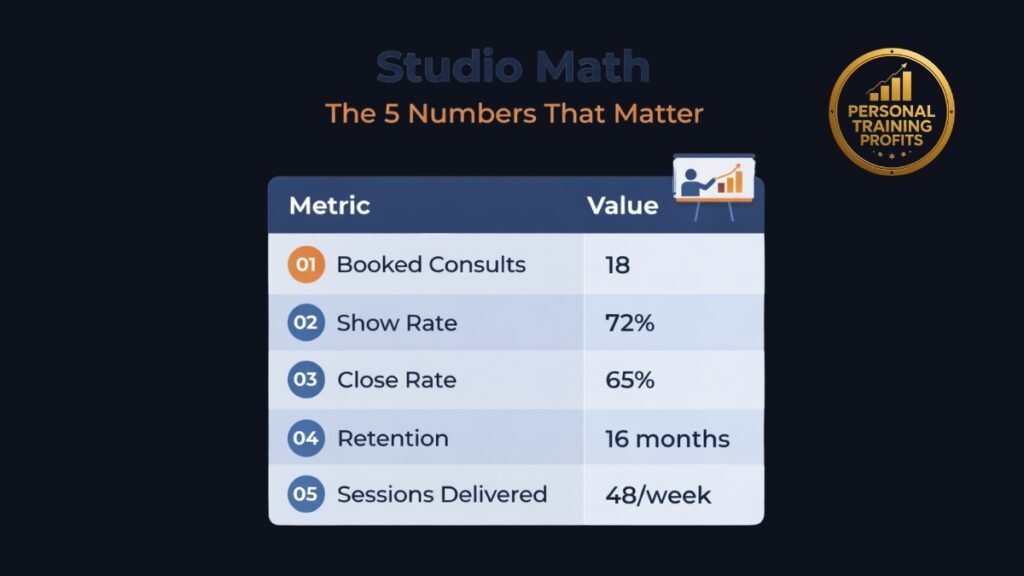
🧾 Studio math: Why retention changes revenue
Retention is a multiplier. It affects every number that matters.
1) Higher retention increases lifetime value
Simple example:
- If a client stays 3 months, the studio must replace them constantly.
- If a client stays 12 months, the studio builds a base.
Longer retention increases lifetime value, making it easier to afford marketing, staff, and better service.
2) Higher retention reduces the lead pressure
If you retain longer, you need fewer new clients each month to grow.
That reduces:
- ad spend pressure
- discounting
- “panic marketing”
- reliance on seasonal spikes
3) Higher retention stabilizes monthly revenue
Studios that retain well have smoother months. That allows:
- better staffing decisions
- more consistent service delivery
- less financial stress
4) Retention improves referrals
Deconditioned clients refer when they feel safe and successful.
The best referral engine is:
- consistent results
- visible progress
- a supportive environment
That produces steady word-of-mouth without chasing attention online.
🔧 Tools and templates you can copy
Here are simple retention tools to install.
1) The 6-week foundation expectations script
Set expectations early:
“This first phase is about safe progress, routine, and early wins. We track progress weekly and re-assess at the right time.”
2) Weekly progress markers
Track one or two numbers weekly:
- attendance consistency
- energy score 1–10
- girth or body fat trend
- tolerance improvements
3) Re-assessment rhythm
- initial assessment: 60 minutes
- re-assessment: 30 minutes
- schedule re-assessment at the end of the first 6 weeks, then on a steady cycle
4) Client milestone moments
At week 2 and week 4, call out wins:
- “You moved better today.”
- “You recovered faster.”
- “Your confidence is higher.”
Milestones drive retention.
🧱 A simple retention-first studio model
If you want predictable revenue, prioritize:
- onboarding and assessment quality
- 6-week foundation phase
- three sessions per week default recommendation
- tracking and re-assessments
- a calm client experience
Retention is not a marketing tactic. It is the business model.
➡️ Next step
If your studio wants predictable revenue, build the model around the non-gym majority.
Start with Playbook 1: The Deconditioned Market. It outlines the positioning, the consult structure, and the client journey that improves retention from the start.








Please help us by sharing on your favorite Social Media