This case study is a key bridge in my story, and in the Personal Training Profits story.
Just Results proved the model could be built from scratch, systemized, and scaled. 4.0 Studio, later Planet U, proved something different: the same systems could be installed into an existing operation, turned around quickly, and pushed to national-level performance in one location. It also became a platform for broader industry influence, education, and rollout potential.
📌 What you will learn from this case study
- Why a personal training business model must be separated from gym and club logic to scale
- How the right positioning and client-friendly language can change lead cost and conversion
- What happened when proven systems were installed into a live studio instead of built from scratch
- Why strong revenue can still hide weak profitability if rent and layout are inefficient
- The lessons about ownership, agreements, and business drift that shaped everything that came next
Table of Contents
- Case Study ID
- Background and context
- Starting point
- The problem
- The decision
- The build
- The numbers
- What changed and why
- What I learned
- Then vs now
- Next step
Case Study ID
Case Study Name: 4.0 Studio / Planet U
Time Period: 2000 to 2003
Location: Dallas, Texas, USA
Business Name: 4.0 Studio / Planet U
Business Model: Multi-trainer personal training studio model with franchise-style systems, originally built around a broader training and nutrition concept
My Role: Consultant, General Manager and system developer
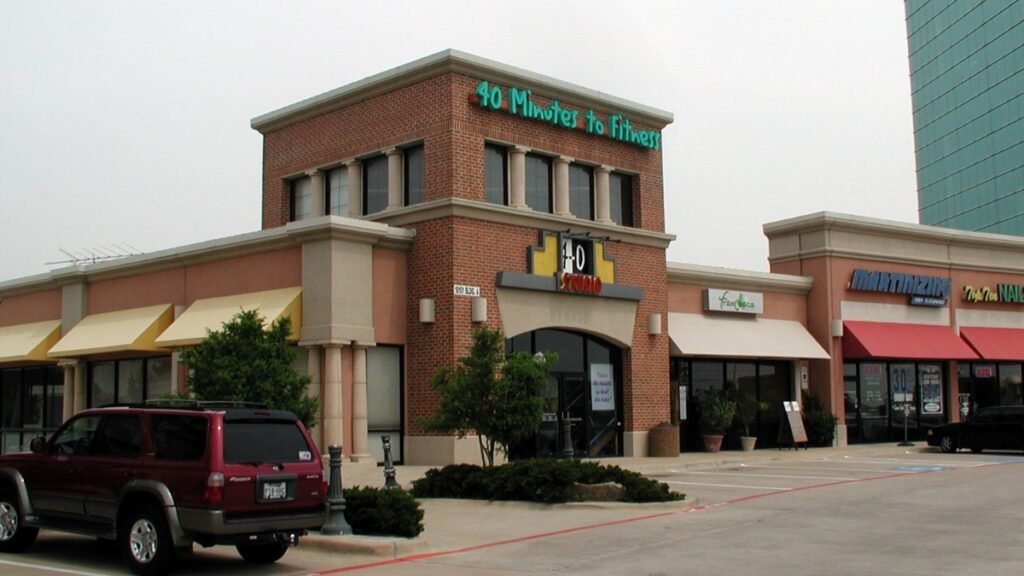
The business originally operated under the name 4.0 Studio, with the tagline 40 Minutes to Fitness. The period between the 4 and the 0 was used so the name would not be misread as “40 Studio” for people over 40. The name is pronounced as “Four O Studio.”
A strong component of the business was the nutrition side. That came through a merger with Calibrations, a nutrition company that had provided customized meal plans to hundreds of health clubs and studios across the United States. Their system was built by dietitians and allowed clients to select foods from a menu-based structure, supported by cookbooks, exact recipes, and a calorie-reduction plan that tapered gradually over about 6 weeks. I had used similar nutrition-based approaches successfully in earlier models as well, so this was a meaningful part of the overall concept.
This chapter also represents a personal transition for me: moving from founder/operator into the consulting-led phase of my career.
“A studio doesn’t fail because the concept is weak. It fails when the systems aren’t followed and the model drifts.”
1️⃣ Background and context
By the time 4.0 Studio came into my life in a serious way, I had already known the people behind it and the Calibrations side of the business for quite some time.
At that stage, I had already taken Just Results Lifestyle Studios to the point where it was franchise-ready, and there were interested parties looking at acquiring the brand. One of the major parties was the public company that owned the Nautilus brand, but they ultimately declined because they did not want to be perceived as competing directly with their core market of health clubs and fitness centers.
That left me at an important crossroads.
Pressure was being put on me to sell Just Results because my investor had lost interest in the project. More importantly, although it was well understood that I was supposed to become an owner, the arrangement had never been fully formalized in writing. At the same time, I was also going through a divorce, which contributed to too much of the structure still resting on handshake understanding instead of written protection. When that ownership was effectively withheld, I began looking at other options for myself and my future.
That became one of the hard business lessons that stayed with me. Over the years, it is one of the reasons I have generally preferred to avoid partnerships where possible unless the terms, control, and ownership are clearly documented.
The 4.0 Studio opportunity was there at exactly the right time. The original founder from the Calibrations side was strong on the nutrition concept, but the studio itself was missing the systems needed to actually make money. An offer was made for me to come in on a 90-day consulting project, and once that was locked in, I formed my own company and parted ways with Just Results.
A second manager had already been brought in after the original founder was bought out. He was highly qualified on the exercise side, very organized, and strong in certifications, but he lacked the creativity, marketing edge, and commercial push needed to move the business to another level. During the first 90 days, the business improved somewhat, but it still was not where the owners wanted it to be. At that point, I was offered an ongoing on-site consulting role to run the business and turn it around, and that relationship lasted about 3 years in Dallas, Texas.
That made this case study very different from Just Results.
With Just Results, I had closed down the previous business, renovated the site, and reopened it the way I wanted it. With 4.0 Studio, the location, layout, and much of the visual concept were already there. It was not ideal, but it was workable. So instead of shutting it down and starting over, I rapidly began installing the systems the business was missing.
I systemized the sales process, the Program Director role, how the trainers worked with clients, the assessment process, the reporting process, the marketing, and the computerized scheduling. Once those changes went in, the business began turning around quickly.
The timing in the industry also mattered. There were one or two personal training franchise concepts beginning to appear, but most were still very different from what I believed the market needed. Some focused on individual rooms or bays with small free-weight setups and resistance bands, which I never felt was the strongest commercial model. My view was that a more open but still private and controlled studio environment, using high-end equipment such as Nautilus, created better time efficiency, better flow, and a stronger overall client experience.
By then, I had already been presenting many of these ideas at Club Industry and to the Nautilus organization. Nautilus was actively helping spread what I had been doing for years through its rep network across the United States and beyond. So this case study was not just happening inside one location. It was unfolding while these ideas were also moving more broadly through the industry.
From Renouf to Just Results, I brought a much stronger understanding of the deconditioned market and how to appeal to a broader audience. One of the first things I changed was the positioning. The original tagline, 40 Minutes to Fitness, was not one I believed in strategically because of how strongly the word “fitness” pulls a personal training studio back toward the image of the traditional club model. We replaced it with Personalized Conditioning. Later, as the rollout plan became more serious, we dropped the 4.0 Studio name entirely and developed Planet U, with the tagline Reshape, Recharge, Re-live.
This opportunity was never just about fixing one struggling business. It was a combination of consulting opportunity, scale opportunity, industry influence, and rollout potential. We were looking at standalone franchise centers, but Nautilus also saw a stepping-stone opportunity in creating smaller private units inside underused club spaces such as racquetball courts. The idea was to help penetrate the deconditioned market inside a more private studio-style setting first, then potentially transition those clients into larger club usage later if appropriate.
That bigger rollout vision was part of what made this chapter so important.
“The moment the business stops sounding like a club, it becomes easier to sell, easier to retain, and easier to scale.”
2️⃣ Starting point
When this case study began, I was in my mid-30s and had reached a point where I wanted to start building assets for myself, not just helping build value for other people under unclear arrangements.
By then, I had learned a hard lesson. Systems, manuals, and standard operating procedures matter, but ownership, control, and written agreements matter even more. Too many people, myself included earlier on, assume they can trust partners, investors, or friends and work out the details later. That is a mistake. If everything is in writing from the start, it reduces misunderstandings and forces clarity around who does what, who owns what, and what happens if the parties disagree or no longer want to be in business together. From that point on, I formed my own company for the consulting agreement and insisted on written agreements.
At the same time, I was still highly motivated to keep pushing the studio model forward. By then, I had already proven the concept repeatedly. I had started these businesses from scratch, turned around similar businesses, and attracted the attention of multiple large public companies. I knew the model was viable, profitable, and transferable. I knew I had a system that could work regardless of country, studio size, or location.
In my mind, most of the core business had already been solved. The concept was solved. The marketing was solved. The messaging was solved. The systems, manuals, staff training, and delivery model had all been proven. What had not been solved yet was how to grow it properly across the country through a franchise or licensing model.
That was why I was especially interested in the Nautilus relationship at that point. Not as another ownership arrangement, but as a strategic partner with a mutual interest. I could bring the model, the systems, and the rollout logic. Nautilus could benefit from equipment sales into a new and very lucrative market, one built to penetrate the deconditioned market rather than just serving the same old club audience.
According to multiple surveys, the 3 main reasons people did not join a traditional facility were simple: time, lack of results, and intimidation. My business model solved all 3.
At that time, personal training was popular and most health clubs offered it. Some clubs were beginning to rent space to outside trainers. There were also scattered owner-operator studios, but most were still founder-dependent operations. I recall there being one franchise-style concept that had begun licensing or franchising, but it used individual bays with low-end equipment, and I never believed that was the strongest commercial model. I felt my system was better, more efficient, and more scalable.
What made this opportunity strategically important was the ownership. Unlike the situation I had just come through, the owners behind 4.0 Studio had deep pockets, long-term commitment, and years of planning already behind the business. That made it look like a credible vehicle to finally duplicate the model on a much larger scale. At that point in my life, with my new consulting company in place, it looked like the best move for me and the best chance to take the concept to the next level.
3️⃣ The problem
The typical gym, health club, and fitness center model at that time operated much the same way it still does today.
Those businesses work on volume. They make money when people pay and do not go often enough to strain the model. My line in the sales process was always simple: health clubs make money when you pay and do not go, while our business only makes money when you come back. The only way to make that happen consistently is to get results.
That was one of the reasons I became so strongly opposed to using the word “fitness” in the name of a personal training studio. In my view, that word pulls the business back toward the image of the health-club model, and that image limits broader appeal. The same logic applied to layout and visibility. I did not want the studio to feel like a gym on display from the street. I wanted it to feel more private, more controlled, and less intimidating.
Most personal training businesses at that time were still very much small owner-operator setups. Every city had a few. They were usually built around superstar trainers, mixed in the same language and imagery as the club world, and were not set up to systemize or scale. They depended too heavily on one personality, one owner, or one local reputation.
That is why I believed 4.0 Studio still had real potential. The owners were committed, much of the facility had already been built, and the core concept was not beyond saving. But the business needed stronger positioning, stronger systems, and stronger marketing.
Once those changes were made, the business turned around and eventually grossed more than $1 million per year. According to the owner’s own testimonial, we broke national sales records for a personal training studio of that size.
At that time, I did not believe anyone had yet fully solved the scalable studio model. The franchise concepts beginning to appear were still missing key pieces, especially around layout, equipment logic, and positioning. Even today, while some franchise models have proven they can grow and generate strong revenue, I still do not believe most have the complete picture. Many have some of the puzzle, but not all of it.
Inside 4.0 Studio specifically, one of the biggest problems was that the previous managers were still too entrenched in the health-club mindset. They were trying to run a different business for a different market using the assumptions of the wrong model. Once we broke through that, changed the name, changed the positioning, and implemented the systems, the business moved past that limitation.
What this business needed to do differently was follow the proven steps I had already developed. Once it did, it became profitable for the first time, crossed the million-dollar mark annually, and attracted the attention of a large public company that wanted to back and promote the concept on a much larger scale.
4️⃣ The decision
The “why now” behind this chapter was that I had taken Just Results as far as I could under the circumstances.
By that point, I had effectively smoked out the fact that the investor was not truly committed in the way he had originally claimed. He was not committed to scaling the business properly, and he was not committed to giving me the ownership that had been promised.
Consulting through my own company for 4.0 Studio became the logical move. I already knew the people involved, I knew how committed they were, and I knew I could solve the problem they had. So when the time was right, I secured the contract with them and made the move. Financially, it was also a strong step forward for me personally.
That whole experience also reinforced something I had already seen more than once. Without passion, leadership, and proper implementation, a studio can start to fizzle. Just Results worked because the systems were in place and I was the driving force behind them. Without that, the business began to decline over time and was eventually closed. I have seen that pattern repeatedly. These systems work when they are followed, and businesses can fail when they are not.
This opportunity also made strategic sense because of where it was located. Dallas was a major city, and the studio was positioned so that, if we were going to roll this model out, we could bring people in from all over the country or even internationally to see it. We had nearby office space where seminars, training, and teaching could be conducted. This was not just one studio location. It had the infrastructure to become a working model and a training base for a much larger rollout.
From day one, I committed to turning the business around and making it profitable. Once that was achieved, the next objective was to grow it into multiples. I was in the driver’s seat to help build that and to work with like-minded companies such as Nautilus to promote and expand the concept on a larger scale.
My role was different this time as well. On paper, I was a consultant under my own company, but in practical terms I ran the business as the general manager with full control of the operations. I worked on the business rather than in it. I hired the salespeople, hired the Program Directors, installed the systems, and focused on building the structure needed for growth.
From the client side, what made the model different was that it solved 2 of the 3 biggest problems in the market. The original 40 Minutes to Fitness concept addressed the time problem. Later, when we added guaranteed results in 6 weeks, the formula became stronger because it also solved the results problem. Once that combination was in place, the business took off, first through marketing and relaunch momentum, then through word of mouth, location, and lower-cost marketing methods.
The consulting structure also gave me something I had not always had before, security. This time it was my company, my contract, and a rock-solid written agreement.
“The studio didn’t need more motivation. It needed systems, positioning, and control.”
5️⃣ The build
The build at 4.0 Studio was less about inventing a business from scratch and more about refining, tightening, and systemizing a model that already had some useful components.
On the lead-generation side, radio advertising was already working well for the business, so we kept that in place. We also used strategic billboards, local newspaper advertising, brochure stands, referral programs, and the studio website, which by that stage was already starting to produce leads. The internet was more developed by 2000 to 2003 than it had been in earlier businesses, but it was still early enough that traditional media continued to play a major role. Together, those lead sources were enough to build the client base to more than 200 active clients per month.
The consult process itself was the same structure I had already refined in earlier models. It was all about building rapport, understanding the prospect’s real problem, and then providing the right solution. That process produced strong conversion, with close rates averaging over 85 percent.
The delivery system was already similar in principle to what I had used before, but we streamlined it further through computerized scheduling, which improved flow, organization, and day-to-day efficiency. The business did not need a total reinvention of service delivery. It needed a cleaner and more disciplined version of what it was already trying to do.
The pricing model was different in one key respect. 4.0 Studio used automatic monthly billing, with clients billed on the first of each month. That created better consistency in cash flow and administration. In later businesses, I moved toward weekly billing because I believe it is even more efficient, but both systems work well when managed properly.
Retention was one of the strongest parts of the model. On average, 4.0 Studio was holding one-to-one personal training clients for about 10 months, which is an outstanding number, especially with a client base of over 200 active clients. That level of retention is only possible when the business is delivering a consistent experience and real results.
Operationally, the structure was very similar to what I had used at Just Results. We had AM and PM reception coverage, a full-time sales consultant focused on enrollment, and AM and PM Program Directors who handled the initial programming and the re-evaluations.
In many ways, the model was already close. It did not need a dramatic reinvention. What it needed were the right tweaks, stronger systems, and a different culture. One of the most important shifts was replacing the old fitness-world language and mindset with the client-friendly terminology and positioning I brought with me. That change went deeper than words. It reshaped how the business presented itself, how staff thought about the client, and how the model fit the market.
What made this version more sophisticated, more scalable, and more influential than earlier versions was the setting around it. The studio was in a prime North Dallas location, at a busy intersection, and in a market where people were willing to invest in their health and well-being. Dallas also gave us something else, the ability to make the business a training and rollout base. The bigger opportunity was not just to run one successful studio. It was to create a working model where people could come, learn, and eventually help duplicate the concept more widely.
Once the systems were installed, the transition from what the business had been to what it could become was actually quite straightforward.
6️⃣ The numbers
When I first became involved, the studio was generating roughly $40,000 to $50,000 per month.
That might sound solid on paper, but the economics were not nearly as strong as they looked. The location was prime, and the rent alone was more than $10,000 per month. On top of that, there was a lot of wasted space and inefficiency built into the layout and operating model. So while the business had revenue, it was not yet running the way it needed to in order to become a strong commercial success.
Once I got involved and made changes to the programming and pricing, growth accelerated.
Through improved systems and stronger promotions, especially radio and billboard campaigns, we were able to add up to 45 new clients in a single month. That momentum compounded over time and pushed the studio to an average of more than 200 active clients per month.
By the time I finished, the studio was generating more than $80,000 per month and delivering between 1,600 and 1,800 sessions per month. Conversion averaged about 85 percent, and average retention was roughly 10 months.
Capacity, however, remained part of the lesson. Because of the size and layout of the studio, we were effectively capped at 6 trainers working at once. That was important because I had already proven in earlier models that similar output could be achieved in a smaller studio with much lower overhead and better efficiency.
That is what made the economic comparison with Just Results so revealing.
4.0 Studio / Planet U became profitable, but it did not compare with the profitability of Just Results, especially the 1,500-square-foot model. That smaller studio had months of more than $50,000 in revenue at a fraction of the overhead.
In other words, 4.0 Studio proved that a business can post impressive top-line numbers and still be less commercially efficient than a smaller, smarter model.
7️⃣ What changed and why
One of the biggest turning points in this case study was proving once again that when a studio is separated from the traditional fitness image, it performs better.
That was true in the marketing, it was true in the client experience, and it was true in the economics. Once the business moved away from the old fitness-club identity, it became easier and less expensive to attract clients, and it also became easier to retain them for longer. That is why one of the most important shifts was the rebranding, first away from 4.0 Studio, 40 Minutes to Fitness, then toward Personalized Conditioning, and later into Planet U, Reshape, Recharge, Re-live.
That change was not cosmetic. It reflected a deeper positioning shift. The more the studio looked and sounded like a club or fitness business, the more it carried the wrong baggage. The more it looked and sounded like a private, client-friendly, results-driven environment, the stronger it became.
The next major change was the installation of the systems themselves. In truth, this model was not necessarily more advanced than Just Results. It was more refined. The underlying principles were very similar. But this case study did reveal some handicaps in the existing setup. The open floor-plan layout was not as private as the studio designs I preferred, and I saw that as a disadvantage. The very high rent was also a disadvantage, and the premium location did not bring in the kind of drive-by client flow that would ever justify the extra cost. That proved to me that the money spent on prestige location was largely wasted.
At the same time, there were improvements that did come out of this model. One of the clearest was the power of automatic billing. That system gave the business far better predictability and efficiency than trying to manage a large client base manually. With over 200 active clients, that kind of billing structure mattered. It made revenue more visible, smoother, and easier to manage.
This case study also changed my thinking further around scale, staffing, positioning, and rollout. It confirmed that location was not as important as many owners assume. It confirmed that smaller studios were far more efficient. And it confirmed that if I was going to franchise this model or teach others how to do it, the best version was not a large premium site. It was the smaller 1,000 to 1,500 square foot format, with lower overhead, lower risk, easier setup, and easier duplication.
Finally, this case study pushed me from being simply a strong operator into a broader industry role. With the support of Nautilus, the plan was to create an academy-style training center that could serve as a centralized base for education, rollout, and support. That academy was intended to support the growth of the concept, and to become a profit center in its own right. Alongside that, I also put together the licensing and franchising structure that could support much broader expansion.
This chapter did not just improve one business. It clarified what kind of model was worth scaling.
8️⃣ What I learned
Looking back, the lessons from this case study are still highly relevant today.
The first is that location and overhead matter enormously. There is no reason to pay for premium space or a larger studio than the model truly needs. A business can produce strong revenue and still carry too much unnecessary cost if the layout, rent, and infrastructure are heavier than they need to be.
The second is that systems work, and strategy works, but only when they are aligned to the real reasons people do not exercise. Those reasons still come down to 3 major barriers: intimidation, time, and lack of results. If I had to rank them, intimidation was probably the biggest of the three. A business that solves those barriers has a major commercial advantage.
The third is that the business has to stay focused on the right market and the right promise. I have always believed that the core opportunity is helping everyday people, especially those who want weight loss, visible progress, and an experience that feels less intimidating than the traditional club model. If the business drifts away from that, it starts losing the advantage that made it strong in the first place.
There are also several things I would not repeat today.
I would not repeat the premium location and excess overhead. I would not build a larger or more elaborate infrastructure than the commercial model requires. And I would not allow the business vision to drift away from the proven market need into a direction that sounds interesting but is commercially weaker.
That last lesson became especially clear in this case study.
By that stage, I had brought Nautilus to the table, helped put together an academy, added new revenue possibilities, and built a more refined rollout model. Nautilus was ready to begin marketing the new business model. But the owner began to see the business differently. In his mind, it needed to be more of an “adventure,” more about longevity, and less about getting people into visible shape over a shorter period of time. That thinking also connected to the newer branding direction, including the Reshape, Recharge, Re-live tagline.
I disagreed.
In my view, people were coming to personal training because they wanted to lose weight and get visible results. That meant the studio, the programming, the culture, and the positioning needed to be built around that reality. When the business started moving in a different direction, I was able to step away cleanly because I had my own company, a written agreement, and a secure consulting structure. I had been well paid, my role was protected, and I could move on without being trapped.
That experience also reinforced what became part of the foundation of Personal Training Profits.
It taught me to be selective about partners, if any. It taught me to be very clear from the beginning about what the business is, who it is for, and how it makes money. It taught me that wild-card ownership decisions and shifting vision can disrupt even a proven model. And it pushed me further away from wanting to franchise my own brand and more toward consulting, where I could help others build stronger businesses without tying my future to the wrong ownership structure.
It also confirmed another belief I still hold today. In my opinion, many successful franchise-style models have solved 2 of the 3 big barriers. They have solved time efficiency, and they have solved results. But they still have not fully solved intimidation, which I still believe is the number one reason many people avoid a traditional exercise facility or do not hire a personal trainer in the first place. That is why I remain critical of open-floor-plan models, street-visible exercise environments, and brand language built around “fitness” or “strength.” Those businesses may be successful, but in my view they still do not solve the full problem.
Since that time, I have increasingly moved toward helping smaller owner-operators build more efficient studios on a more practical scale. That is one of the reasons this case study matters, because it shows how the same principles worked in a larger setting, and why the best “scale version” is often smaller and more private, not bigger and more expensive.
9️⃣ Then vs now, what to keep and what to change
What I would keep today
These are the principles I would still build around today.
- Strong messaging
- Clear target-market focus
- Systemized delivery and operations
- A business model designed for the non-gym majority, not the small percentage already using gyms
- The same core principles that worked in gym settings, expert-trainer environments, in Australia, the Middle East, and the United States
What I would change today
These are the parts I would update based on what I know now.
- Improve the billing model
- Document everything from the beginning
- Insist on solid written agreements from day one
- Define all major planning points up front: who the business is for, where it will be, culture, training protocols, pricing, roles, ownership structure, and what happens if there are disagreements
- Treat ownership clarity and alignment as essential, because even a great business can be damaged if owners do not agree
What today’s trainer should copy
The goal is not to copy the tactics, it is to copy the principles.
- Copy systems that have already been proven
- Learn how to market to the non-gym majority
- Do not model the business around the fitness industry or gym logic
- Understand that a personal training studio is a different business model serving a different market
- Keep the model small, efficient, and tightly run
- Follow systems rather than personality-driven guesswork
- Build for the non-gym majority if the goal is a real, scalable business
➡️ Next step
Thinking about your own place? What a small studio costs to open, what 18 clients across 54 sessions a week actually produce, and the arithmetic to run before you commit to a lease. → The numbers behind your own studio
About the Author

Paul Barclay has been building supervised personal training studios since 1992, in Australia, the Middle East and the United States. That includes a Perth centre doing over $1,000,000 a year that expanded from one location to four, an Ohio studio franchise-ready by 2000, a Dallas turnaround that doubled monthly revenue, and an 850 square foot room that produced six figures a year for a decade.
In 1996 he presented a model to Nautilus arguing that three barriers keep most people out of gyms. The industry solved two of them and built a multi-billion dollar franchise category on the back of it. The third is still open.
Personal Training Profits exists to help people open studios they own outright, without a franchise fee and without a royalty in perpetuity.








Please help us by sharing on your favorite Social Media