
Most people considering a personal training studio have seen plenty of big numbers.
Franchise investment ranges.
Equipment packages.
Build-out estimates.
Working capital requirements.
But those numbers are often bundled together, which makes it difficult to understand what opening an independent personal training studio actually requires.
So here is the build line by line.
For the worked example in this article, an independent personal training studio of approximately 850 to 1,200 square feet comes to roughly:
$39,000 to $89,000 if everything is paid for outright.
Or approximately:
$19,000 to $60,000 in upfront cash if the equipment is financed.
Those are two different measurements.
Financing does not make the studio cheaper. It changes when some of the money is paid.
And there is another number worth putting beside the setup cost.
Using a simple 18-client owner-operator model, the studio can produce approximately:
$140,400 a year in gross revenue
with approximately:
$100,000 as a before-tax owner result
in the worked example.
This is not a promise of income.
It is an illustrative model showing how the numbers can fit together.
The real lesson is that there is no single price for opening a personal training studio.
There is a price for the studio you choose to build.
Prefer to watch? Here’s the full YouTube breakdown.
📌 Key Takeaways
- A properly funded independent personal training studio can be much smaller and less expensive than many people assume.
- The worked example uses approximately 850 to 1,200 square feet.
- Paying outright produces an estimated opening range of roughly $39,000 to $89,000.
- Financing equipment reduces the upfront cash requirement to roughly $19,000 to $60,000, but does not reduce the total cost.
- Equipment is normally the largest single startup line and one of the biggest owner choices.
- Working capital is separate from pre-opening marketing and should not be ignored.
- Arriving with an existing client base can materially shorten the required runway.
- In the worked owner-operator example, 18 clients produce approximately $140,400 in annual gross revenue.
- The model produces approximately $100,000 as a before-tax owner result, based on the stated assumptions.
- An 850-square-foot studio can support more than one trainer when it is laid out properly.
- Small does not necessarily mean limited.
- The goal is not to build the most impressive studio. It is to build the right studio for the business model.
🧭 Who This Is For
This article is for someone seriously considering opening a personal training studio.
That may be:
- an experienced trainer ready to move out of rented gym space;
- a studio owner planning a second location;
- a commercially experienced operator exploring the personal training industry;
- someone comparing independent ownership with a franchise;
- or a business-minded entrant who wants to understand the economics before making a commitment.
The important word is seriously.
Once leases, equipment, financing, and working capital enter the conversation, guessing becomes expensive.
The purpose of this article is not to give one universal number.
It is to show the structure behind the number so you can replace the assumptions with your own.
⚠️ The Problem With Most Studio Cost Estimates
Most opening-cost estimates fail in one of two ways.
They either bundle everything into one intimidating number, or they leave out important costs entirely.
Neither is particularly useful.
A prospective owner needs to know what the money is actually buying.
The build below is not assembled from other people’s estimates. It comes out of studios that were built and owned in Perth, Western Australia and Kettering, Ohio, and installed for other owners in Dallas, Texas and Oakwood, Ohio. The full record is on the Results and Experience page.
Equipment is one decision.
The lease is another.
Fit-out is another.
Marketing and working capital are different again.
And several of those costs are choices rather than fixed requirements.
That is why two personal training studios serving essentially the same type of client can open for very different amounts of money.
One owner may buy premium branded equipment.
Another may buy well-chosen commercial equipment for considerably less.
One may take a unit requiring flooring, partitions, mirrors, and lighting.
Another may find a unit that is almost ready to use.
The service can still be professional in both.
Capital is partly a design decision.
✅ The Better Way to Think About the Budget
Break the opening cost into individual components.
Then ask three questions about each one:
- Is this genuinely required?
- Is this number controlled mainly by my market or by my choices?
- Does it need to be paid today, or can it be financed or delayed?
That creates a much more useful studio budget.
It also prevents the most common mistake, which is deciding what the studio should look like before deciding what the business needs.
1️⃣ Start With the Size of the Business, Not the Size of the Building
A small personal training studio does not need to imitate a health club.
The business model is different.
The client is not buying access to hundreds of pieces of equipment.
The client is buying scheduled supervision, guidance, accountability, progression, and a professional environment.
That means the building can be much smaller.
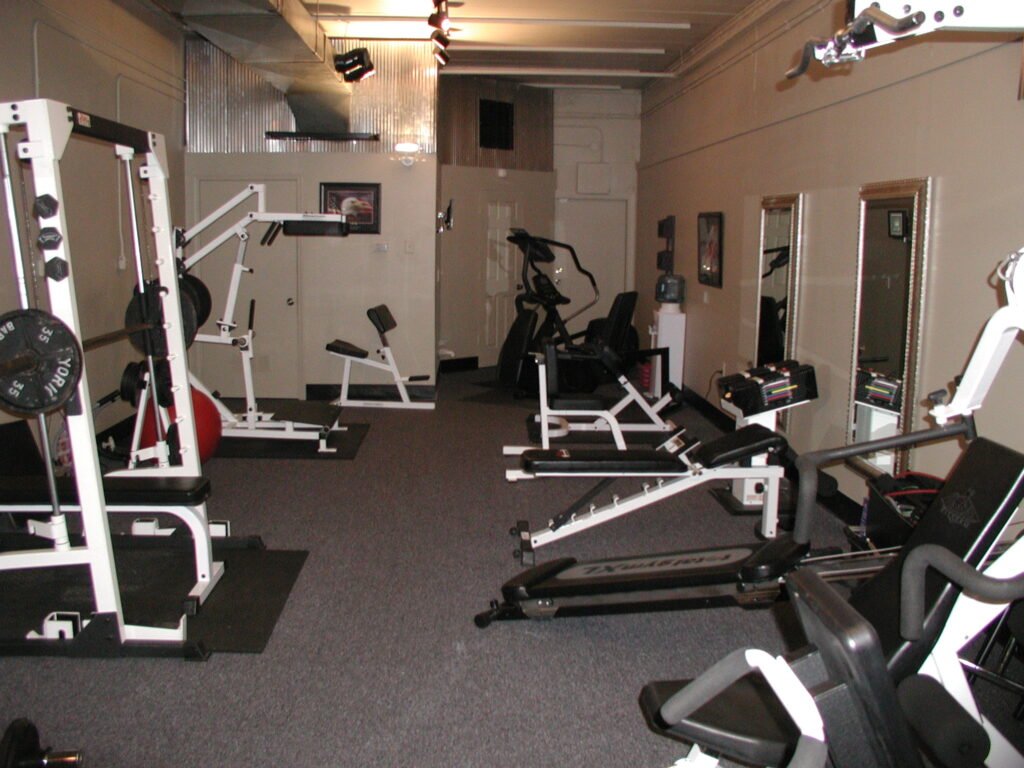
For an owner-operator or small multi-trainer studio, approximately 850 to 1,200 square feet can be enough.
The important features are more practical:
- convenient access;
- appropriate parking;
- workable equipment flow;
- sufficient room for supervised sessions;
- reasonable occupancy costs;
- and a location that matches the target market.
A smaller footprint reduces more than rent.
It can also reduce:
- build-out;
- cleaning;
- utilities;
- maintenance;
- furnishing;
- and the amount of equipment needed to make the space feel complete.
A small studio should look intentional, not unfinished.
Those are different things.
2️⃣ Equipment Is Usually the Biggest Line
In this worked model, equipment is approximately:
$20,000 to $30,000
That makes it the single largest component of the opening budget.
It is also one of the most flexible.
There is a substantial difference between buying premium branded equipment throughout the studio and selecting solid commercial equipment that performs the job without carrying the same brand premium.
That is a capital decision.
It does not mean the cheaper studio should be filled with unsuitable residential equipment.
The equipment still needs to be safe, durable, professional, and appropriate for supervised personal training.
But the studio does not have to become an equipment showroom.
It also does not need to buy everything it might eventually want on day one.
A studio can start with the equipment needed for the current client base and add to it as demand grows.
That keeps capital attached to real need rather than anticipation.
3️⃣ The Other Opening Costs Are Smaller, but They Still Matter
After equipment, the remaining startup costs are far less dramatic individually.
But they still need to be included.
Lease deposit and first month
Approximately:
$2,000 to $3,000
This should come after the business model and location economics have been tested.
The lease is not the first step.
Fit-out
Approximately:
$0 to $15,000
This is one of the widest ranges because the unit matters enormously.
A good existing space may need almost nothing.
Another may require:
- flooring;
- lighting;
- partitions;
- paint;
- mirrors;
- or other basic modifications.
Signage
Approximately:
$100 to $2,000
A personal training studio does not need an extravagant signage package.
It does need to be professional and easy to find.
Website, booking, and payment systems
Approximately:
$500 to $3,000
This includes the basic technology needed to market the studio, book appointments, and collect money reliably.
Insurance, permits, and licensing
Approximately:
$1,000 to $3,000
Exact requirements vary by location.
Professional fees
Approximately:
$1,500 to $4,000
This may include:
- entity formation;
- an attorney reviewing the lease;
- and an accountant setting up the books correctly.
These are easy lines to overlook because they do not make the studio look more impressive.
They can still save the owner from much more expensive problems later.
4️⃣ Pre-Opening Marketing Is Not Working Capital
These two numbers are often combined.
They should not be.
Pre-opening marketing
The worked range is:
$3,000 to $6,000
The purpose is to generate interest before the doors open.
The goal should be opening with appointments already scheduled, not opening first and then beginning to look for clients.
Working capital
The worked range is:
$7,500 to $15,000
This represents approximately three to six months of fixed costs.
Opening the studio is one event.
Filling the studio is another.
Rent continues while the client base grows.
Insurance continues.
Software continues.
Marketing continues.
If equipment is financed, those payments continue too.
A studio can have a perfectly viable business model and still fail because it runs out of time before the schedule fills.
That is why working capital deserves its own line.
5️⃣ Your Existing Client Base Changes the Runway
Two people can open essentially the same studio and need very different amounts of working capital.
The difference may have nothing to do with equipment, rent, or the building.
It may be experience and existing clients.
An established trainer moving from rented space into their own studio may already have people ready to follow.
That dramatically changes the opening period.
A business owner entering the industry with a newly hired trainer may start with no client base at all.
Nobody automatically appears because the doors opened.
That operator needs a longer runway.
This is why three months of working capital should be viewed as the floor, not automatically the plan.
Six months is more conservative when the business is starting from zero.
The nine opening components remain essentially the same.
The question is how long the owner needs to carry them before the business reaches useful capacity.
6️⃣ Here Is the Full Cost Build
Using the worked ranges:
| Component | Estimated Range |
|---|---|
| Equipment | $20,000 to $30,000 |
| Lease deposit and first month | $2,000 to $3,000 |
| Fit-out | $0 to $15,000 |
| Signage | $100 to $2,000 |
| Website, booking, and payments | $500 to $3,000 |
| Insurance, permits, and licensing | $1,000 to $3,000 |
| Professional fees | $1,500 to $4,000 |
| Pre-opening marketing | $3,000 to $6,000 |
| Working capital | $7,500 to $15,000 |
The components total approximately:
$35,600 to $81,000
Add a 10% contingency, because something usually costs more than expected, and the approximate opening range becomes:
$39,000 to $89,000 paid outright
More precisely, the underlying calculation is approximately $39,160 to $89,100 before rounding.
These are illustrative USA ranges.
They are not a universal quote.
The useful part is the structure.
Replace the relevant assumptions with your own and run the arithmetic again.
7️⃣ Financing Equipment Changes the Cash Requirement
If the equipment is financed rather than purchased outright, the upfront cash requirement in this model drops to approximately:
$19,000 to $60,000
That is not a second opening-cost estimate.
It measures something different.
The studio still costs money.
The equipment has simply moved from a large day-one payment into a series of monthly payments.
In the worked example, the equipment payment is approximately:
$580 to $600 per month
That monthly obligation then needs to be included in working capital while the studio fills.
Financing therefore gives the owner a lower barrier to entry.
It does not create a cheaper studio.
Over the life of the financing agreement, it normally costs more.
The advantage is preserving cash at the beginning.
8️⃣ What Can the Owner-Operator Model Produce?
Now compare the opening cost with a simple owner-operator model.
Assume:
18 clients
Each training:
3 times per week
Sessions are:
30 minutes
At:
$50 per session
That produces:
54 sessions per week
Annual gross revenue:
$140,400
Using approximately $40,000 in annual operating costs for items such as occupancy, equipment financing, insurance, software, payment processing, accounting, and ongoing marketing, the example produces approximately:
$100,000 as a before-tax owner result
Again, this is an illustration.
It is not a guarantee.
The $50 session rate is also local.
A higher-cost market may have higher occupancy expense, but it may also support a higher session rate.
The right approach is not to copy the $50 assumption.
Use the local rate.
Use the local occupancy cost.
Then see whether the model still works.
And include the hours
This is not passive income.
Fifty-four 30-minute sessions require:
27 hours of direct delivery
Add approximately:
- 10 hours for sales and marketing;
- 6 hours for administration and assessments;
and the example becomes roughly:
43 hours per week
That is a real working week.
The distinction is that those hours are being used to build a business the owner controls.
9️⃣ One Trainer Is Not the Ceiling
The approximately $100,000 before-tax owner result describes one owner delivering the sessions personally.
It does not describe the ceiling of the studio.
Assume one additional part-time trainer serves approximately:
10 clients
Training:
3 times per week
At:
$50 per session
That creates approximately:
$78,000 of additional annual gross revenue
If the trainer is paid:
$20 per delivered session
trainer compensation is approximately:
$31,200 per year
After allowing for additional overhead, the worked model estimates roughly:
$40,000 in additional annual contribution to the business
Add another trainer and the economics can expand again.
This is where the distinction between self-employment and business ownership becomes important.
The owner is no longer limited entirely by the number of sessions they can personally deliver.
Small rooms can support multiple trainers
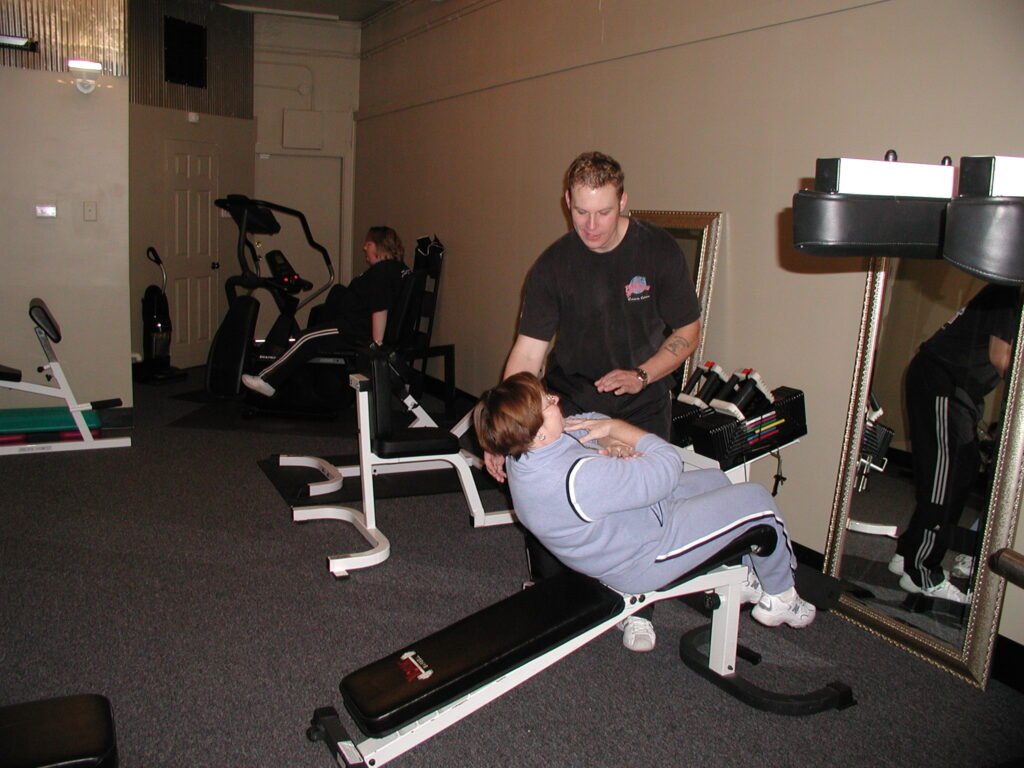
An 850-square-foot studio does not automatically mean one trainer at a time.
With sensible equipment placement and session flow, two trainers can work comfortably in a compact room. Laid out properly, three is the maximum.
What that requires is enough equipment for the changeover, because at any moment one trainer’s next client is warming up while the last one is finishing. Two pieces of cardio per trainer. Two trainers, four pieces. Three trainers, six.
The key is designing the space for the delivery model from the beginning.
For example, clients finishing a supervised portion of their session can transition while the next clients begin.
The space needs enough equipment to support that flow, but it does not require a second facility.
A small room can therefore produce more capacity than its square footage initially suggests.
🔟 The Oakwood Example Shows How Low the Floor Can Be
There is a real example behind this model.
In 2005, David Bond opened The Personal Trainers in Oakwood, Ohio.
The studio was approximately:
850 square feet
It was not extravagantly capitalized.
Some equipment was already available.
Furniture was borrowed.
Most importantly, David was an experienced trainer and arrived with existing clients.
The studio went on to produce more than:
$100,000 a year in before-tax owner result
for approximately a decade.
David owned and operated the business.
Paul Barclay was the consultant and coach on the engagement.
The point is not that everybody should open a studio on borrowed furniture.
They should not.
The properly funded model earlier in this article is a much safer planning assumption.
The Oakwood example demonstrates something different.
The absolute floor can be lower when the operator already has the experience, equipment, client relationships, and ability to fill the schedule.
Capital and experience can substitute for one another to a point.
Someone with less operating experience should compensate with more runway and more preparation, not optimism.
🎯 What to Calculate Before You Open
Before committing to a studio, replace the example assumptions with your own.
Write down:
- The realistic size of the studio
- Local rent and deposit
- Actual fit-out requirements
- Equipment specification
- Equipment purchase versus financing
- Insurance and professional costs
- Pre-opening marketing budget
- Monthly fixed costs
- Working-capital runway
- Local session rate
- Realistic client capacity
- Expected time to fill the schedule
Then run at least three scenarios:
Conservative
What happens if the schedule fills more slowly than expected?
Expected
What happens if the business performs according to the realistic plan?
Strong
What happens when the owner reaches useful capacity and begins adding trainer capacity?
The purpose is not to produce the most exciting number.
It is to determine whether the studio still works when the assumptions are reasonable.
The Key Takeaway
Opening a personal training studio does not require a huge building, hundreds of clients, or an enormous equipment package.
It does require clear arithmetic.
In this worked example:
$39,000 to $89,000 opens the studio if everything is paid for outright.
Approximately $19,000 to $60,000 represents the alternative upfront cash requirement when equipment is financed.
An 18-client owner-operator model produces approximately $140,400 in annual gross revenue.
Under the stated operating-cost assumptions, that produces approximately $100,000 as a before-tax owner result.
And the studio can grow beyond one trainer without automatically requiring a larger building.
The goal is not to spend as little as possible.
The goal is to spend deliberately.
Build the studio the business needs.
Fund the runway realistically.
Then let demand determine what gets added next.
There is no single price for opening a personal training studio. There is a price for the studio you choose to build.
➡️ Next Step
Everything above is the structure. What decides whether a studio works is specific: your rent, your local session rate, how many suitable clients live close enough, and how much capital you have.
The full cost build, the worked economics and the franchise comparison are free and ungated Here with no email required.
If you want that arithmetic run against a specific site rather than a worked example, that is what the Feasibility Report does.








Please help us by sharing on your favorite Social Media